
Read · Case note
Who Checks a “Carbon Neutral” Label? RimbaWatch v NRES and KPDN
Two ministries, one complaint, and a High Court ruling whose reasons are not yet public.
Article
The Story
On 20 September 2025, the environmental group RimbaWatch complained to two Malaysian ministries about a fossil fuel company’s marketing of a fossil fuel-derived product as “carbon neutral”, a claim it says is misleading.[1] It chose its recipients with care. The Ministry of Domestic Trade and Cost of Living (KPDN) answers for consumer protection; the Ministry of Natural Resources and Environmental Sustainability (NRES) answers for preventing pollution and protecting the environment. On 30 September, both replied on the same day. KPDN said the matter was outside its jurisdiction and belonged with NRES. NRES said it was outside its jurisdiction and belonged with KPDN.[2]
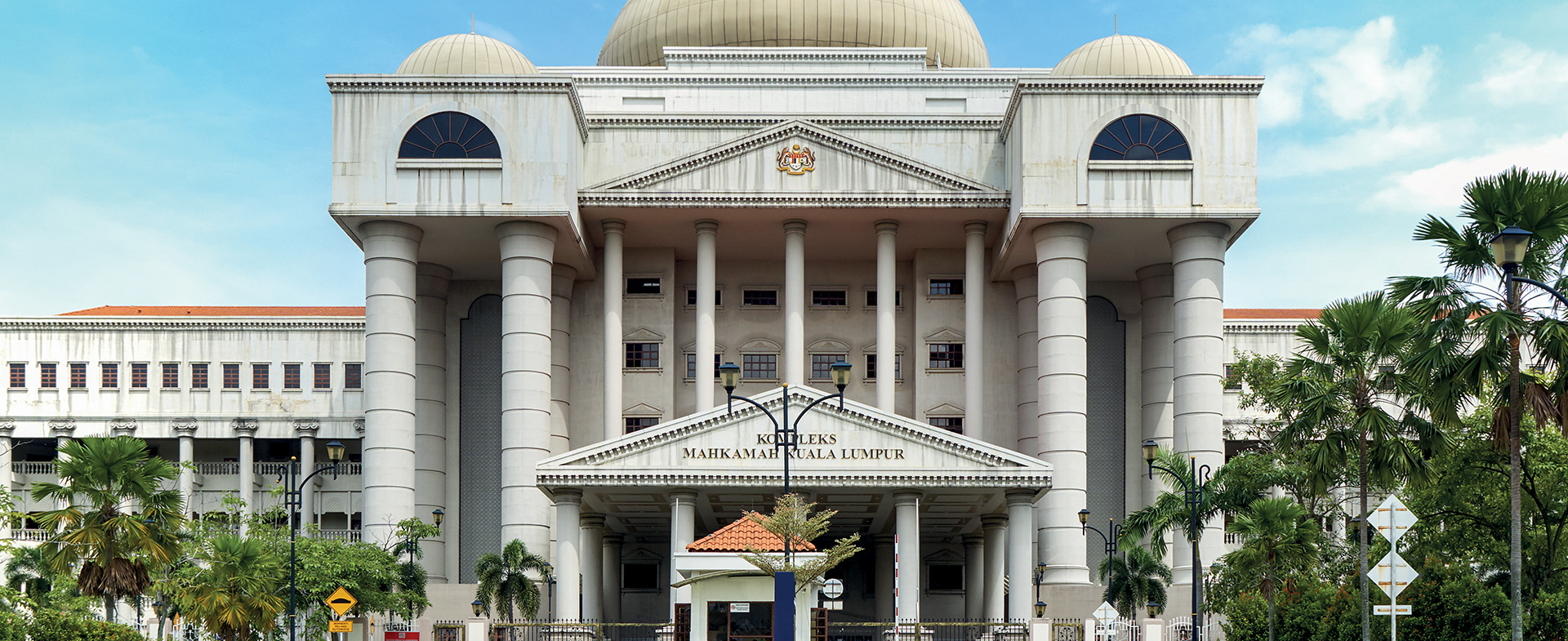
RimbaWatch’s answer was to sue both. In December 2025 it filed two judicial review applications in the Kuala Lumpur High Court, reported as the first climate litigation of their kind in Malaysia.[3] The question at the centre was practical: when each ministry points at the other, who has to look? On RimbaWatch’s account, the effect of the two replies is that no agency appears to be empowered to investigate misleading climate-related marketing.[4] On 23 September 2026, the High Court dismissed both applications in chambers, with no order as to costs. RimbaWatch’s lawyer said it would appeal and ask for the court’s written grounds.[5]
The Complaint Behind the Case
According to court documents seen by The Edge Malaysia, the complaint concerns carbon neutral claims on several Shell Helix engine oils.[6] RimbaWatch says the claim cannot be checked: the source of the offsets, their amount and the methodology behind their certification are not publicly available, and the only detail given is that they are “nature-based”. Its head of legal advocacy contrasts the certainty of emissions from burning fossil fuels with the uncertainty over how long forests and other natural stores can hold carbon.[7] Shell Malaysia told The Edge that it is committed to clear advertising that complies with applicable regulatory requirements and takes particular care with energy-transition communications.[8]
Two cautions belong here. These are allegations, and no court has tested them. And Shell was not the respondent: the applications were against the ministries,[9] so there is no finding on whether the claim was misleading.
What the Law Says
Malaysia has no greenwashing-specific law, according to The Edge, but two existing statutes are in play.[10] The Consumer Protection Act 1999 prohibits conduct that is misleading or deceptive, or likely to mislead or deceive the public about the nature, manufacturing process or characteristics of goods (section 9), and false or misleading representations about goods (section 10).[11] Section 30A of the Environmental Quality Act 1974 lets the Minister, after consulting the Environmental Quality Council, make orders on environmental labelling, including rules on labels for products that claim to be environmentally friendly.[12]
RimbaWatch’s reading is that environmental claims are a subspecies of the general ban on misleading advertising, which places them within KPDN’s reach, and that “carbon neutral” is exactly the kind of label section 30A is aimed at, which places it within NRES’s.[13] The wording of section 30A is where a sceptical lawyer would begin. It describes what the Minister “may” do.[14] It is not framed as a duty to investigate complaints.
The International Law Argument
RimbaWatch also relied, for what it believes is the first time in a Malaysian court, on the International Court of Justice’s advisory opinion of 23 July 2025.[15] The Court called the standard of due diligence for preventing significant harm to the climate system “stringent”, and said States must put in place a national system, including legislation, administrative procedures and an enforcement mechanism, and exercise adequate vigilance to make it function efficiently.[16] On RimbaWatch’s argument, declining to investigate a credible complaint is a failure of that vigilance.[17]
The opinion is advisory and not legally binding, though it carries considerable weight.[18] Paragraph 281 speaks of regulating the activities that cause significant environmental harm.[19] Whether product marketing falls within that, and how an advisory opinion can inform the reading of a Malaysian statute, are questions no Malaysian court has yet answered on the merits.
What Is Not Yet Known
The High Court has given no public reasons, so any account of why it ruled as it did is guesswork. What can be said concerns the procedure. Judicial review in Malaysia requires leave under Order 53 of the Rules of Court 2012, and the threshold is generally described as an arguable case that is not frivolous.[20] The Edge reported that the case was at that leave stage, where the judge decides whether it is strong enough for a full hearing.[21] RimbaWatch has described the outcome as a refusal of leave.[22]
A low threshold is the reason the written grounds matter. They will show whether the court saw a difficulty with the statutes, with the relief sought, with the use of international law, or with something else. RimbaWatch had argued that even a loss would be useful, because the court’s reasoning would show why the government has no duty to investigate and so reveal the shape of the regulatory gap.[23] That argument now depends on the reasoning being written down.
Why It Matters
For consumers, a green label is a claim, and it is currently unclear which agency checks it. For businesses, no greenwashing-specific rules have been reported, but the general law on misleading conduct remains. Kiu Jia Yaw of Kiu & Co told The Edge that existing laws are enough to pursue misleading sustainability claims, while the legal adviser of the Federation of Malaysian Consumers Associations pointed out that the statutes do not define terms such as “carbon neutral”, leaving enforcement officers without guidance.[24] The two views differ on whether new rules are needed, but both turn on enforcement.
For practitioners and students, the case is a compact study in the leave stage, in the difference between a power and a duty, and in how far international climate law can travel into a domestic courtroom. The ministries’ own position beyond their replies remains thin. NRES told The Edge that it respects the right to sue and would wait and see; KPDN did not respond.[25]
What to Watch
Three things will settle how much this case teaches: the written grounds, any notice of appeal and its hearing, and whether either ministry issues guidance on green claims. As at 1 November 2026, we have not located any of them. A court was asked who must look at a “carbon neutral” label. It has ruled, but it has not yet said why.
Citations (in order of appearance)
1. RimbaWatch, ‘RimbaWatch files first-of-its-kind climate litigation case in Malaysia’ Aliran (15 January 2026). Accessed 1 November 2026.
2. FMT Reporters, ‘RimbaWatch files judicial review against 2 ministries’ Free Malaysia Today (30 December 2025). Accessed 1 November 2026.
3. Ho Kit Yen, ‘Court denies RimbaWatch’s bids for judicial review against ministries’ Free Malaysia Today (23 September 2026). Accessed 1 November 2026.
4. ‘Law: RimbaWatch’s judicial review exposes greenwashing gaps’ The Edge Malaysia Weekly (16–22 February 2026), as republished by KLSE Screener. Accessed 1 November 2026.
5. Consumer Protection Act 1999 (Act 599). Accessed 1 November 2026.
6. Environmental Quality Act 1974 (Act 127). Accessed 1 November 2026.
7. Obligations of States in Respect of Climate Change (Advisory Opinion) (International Court of Justice, 23 July 2025), as published in UN Doc A/79/979. Accessed 1 November 2026.
8. ‘The ICJ Advisory Opinion and the Energy Transition Mandate’ NUS Centre for International Law. Accessed 1 November 2026.
9. ‘Court of Appeal Grants Leave for Judicial Review of Attorney General’s DNAA Decision: Bar Malaysia v Peguam Negara Malaysia & Ahmad Zahid Bin Hamidi’ Lexology. Accessed 1 November 2026.
10. Joshua Wu Kai-Ming, ‘6 Things About Leave in Judicial Review Applications’. Accessed 1 November 2026.
11. RimbaWatch, statement of 23 September 2026 on the High Court decision (LinkedIn post, as reproduced on third-party profile pages). Accessed 1 November 2026.
Notes
[1] RimbaWatch, ‘RimbaWatch files first-of-its-kind climate litigation case in Malaysia’ Aliran (15 January 2026).
[2] RimbaWatch statement (Aliran, 15 January 2026) (n 1).
[3] FMT Reporters, ‘RimbaWatch files judicial review against 2 ministries’ Free Malaysia Today (30 December 2025).
[4] RimbaWatch statement (Aliran, 15 January 2026) (n 1).
[5] Ho Kit Yen, ‘Court denies RimbaWatch’s bids for judicial review against ministries’ Free Malaysia Today (23 September 2026).
[6] ‘Law: RimbaWatch’s judicial review exposes greenwashing gaps’ The Edge Malaysia Weekly (16–22 February 2026), as republished by KLSE Screener, section ‘Companies must also step up’.
[7] The Edge Malaysia Weekly, 16–22 February 2026 (n 6), section ‘Companies must also step up’.
[8] The Edge Malaysia Weekly, 16–22 February 2026 (n 6), section ‘Companies must also step up’.
[9] FMT, 23 September 2026 (n 5).
[10] The Edge Malaysia Weekly, 16–22 February 2026 (n 6), section ‘Existing laws can be used’.
[11] Consumer Protection Act 1999 (Act 599), ss 9–10.
[12] Environmental Quality Act 1974 (Act 127), s 30A(1)–(2).
[13] The Edge Malaysia Weekly, 16–22 February 2026 (n 6), section ‘Existing laws can be used’.
[14] Environmental Quality Act 1974 (n 12), s 30A(1).
[15] RimbaWatch statement (Aliran, 15 January 2026) (n 1).
[16] Obligations of States in Respect of Climate Change (Advisory Opinion) (International Court of Justice, 23 July 2025), as published in UN Doc A/79/979, paras 138, 281.
[17] RimbaWatch statement (Aliran, 15 January 2026) (n 1).
[18] ‘The ICJ Advisory Opinion and the Energy Transition Mandate’ NUS Centre for International Law.
[19] ICJ, Climate Change Advisory Opinion (n 16), para 281.
[20] ‘Court of Appeal Grants Leave for Judicial Review of Attorney General’s DNAA Decision: Bar Malaysia v Peguam Negara Malaysia & Ahmad Zahid Bin Hamidi’ Lexology; Joshua Wu Kai-Ming, ‘6 Things About Leave in Judicial Review Applications’.
[21] The Edge Malaysia Weekly, 16–22 February 2026 (n 6), closing section.
[22] RimbaWatch, statement of 23 September 2026 on the High Court decision (LinkedIn post, as reproduced on third-party profile pages).
[23] The Edge Malaysia Weekly, 16–22 February 2026 (n 6), closing section.
[24] The Edge Malaysia Weekly, 16–22 February 2026 (n 6), section ‘Existing laws can be used’.
[25] The Edge Malaysia Weekly, 16–22 February 2026 (n 6), opening section.
Keep exploring