
Read · Case note
A Lagoon Goes to Strasbourg
For the first time, on counsel's account, the European Court of Human Rights has examined an application brought for an ecosystem. It found the application inadmissible, for reasons that say as much about drafting as they do about nature.
Article
Mar Menor y su Cuenca v Spain (Application no 34757/24) and the limits of rights of nature
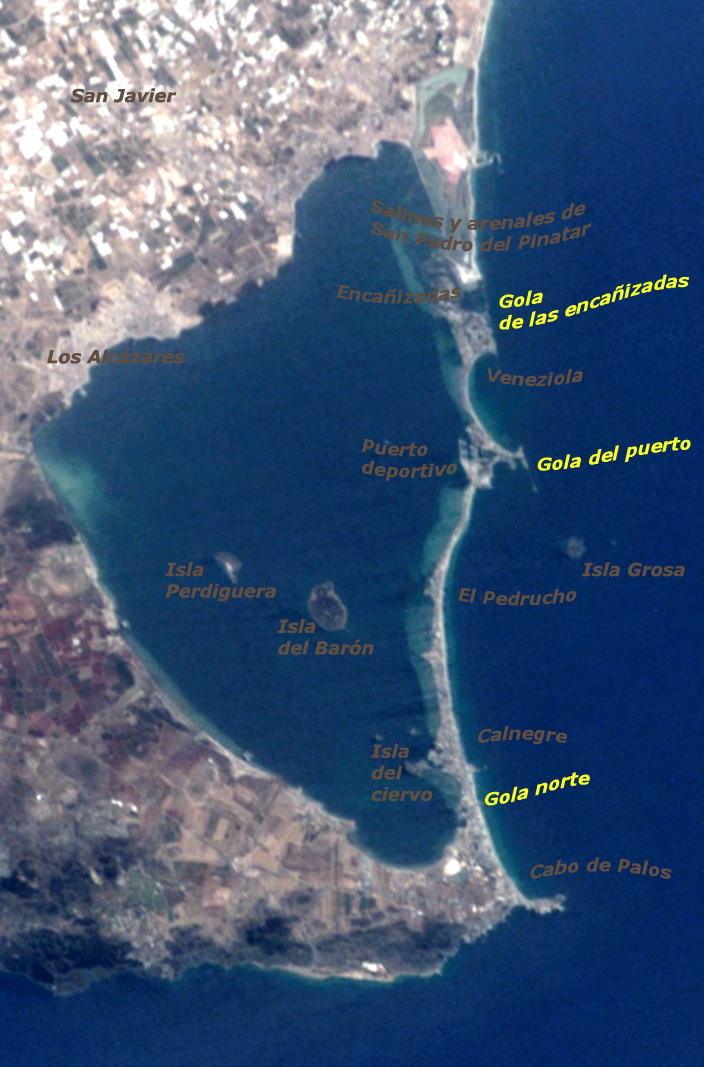
The Mar Menor is a lagoon of 135 square kilometres on Spain's south-eastern coast, the largest on the Spanish Mediterranean. Since 2022 it has also been a legal person. On 8 October 2026 the European Court of Human Rights declared inadmissible an application lodged in its name, in what counsel for the lagoon describe as the first case Strasbourg has examined from an ecological legal person. The decision has been read as a landmark and as a setback. The accurate reading sits somewhere between the two.
What are rights of nature?
Rights of nature is the proposition that an ecosystem may hold legal rights of its own, rather than being protected only because of what it is worth to people. The usual mechanism is legal personality, the same device that allows a company to sue and be sued. Ecuador wrote the idea into its 2008 Constitution, article 71 of which recognises nature's right to “integral respect for its existence”. New Zealand took a narrower, river-by-river route: its Te Awa Tupua Act 2017 declared the Whanganui River a legal person with “all the rights, powers, duties, and liabilities of a legal person”. Colombia's Constitutional Court reached a similar place by judgment, recognising the Atrato River as a rights-holder in 2016.
The designs differ, but they share a practical problem. A river cannot instruct a lawyer, so every system has to decide who speaks for it. That question, as it turns out, decided the Mar Menor case.
The lagoon and the law
The Mar Menor's decline is well documented. Nitrates from intensive agriculture feed algal blooms; when the algae die and decompose they strip the water of oxygen, a process known as eutrophication. One peer-reviewed estimate puts agriculture at around 85 per cent of the nutrient input, with urban sources accounting for the rest. Dead fish washed ashore in October 2019 and again in August 2021.
Spain's response was unusual. A popular legislative initiative gathered 639,826 signatures, against the 500,000 required, and became Law 19/2022 of 30 September 2022. Article 1 declares the lagoon and its basin a legal person and a subject of rights. Article 6 allows any natural or legal person to defend the ecosystem in court, with the action brought in the name of the Mar Menor as the true interested party. Article 3, meanwhile, places representation and governance in a set of statutory bodies that includes a Committee of Representatives. The Constitutional Court upheld the statute in judgment 142/2024 of 20 November 2024, which was delivered with a dissenting opinion, and described the law as the first Euro-Mediterranean measure to give legal personality to a natural entity.
The case
The dispute began in a criminal investigation. Investigating Court No 4 of Cartagena was examining possible environmental offences linked to agricultural pollution. The Alianza Mar Menor association (AMARME) tried to take part on the lagoon's behalf as a private accusing party, relying on Law 19/2022. The Provincial Court of Murcia reversed that, reasoning, as reported, that the body responsible for representing the lagoon had not yet been constituted and that environmental organisations could not simply assume its role. The lagoon and AMARME then applied to Strasbourg, alleging a breach of Article 6 of the European Convention on Human Rights, the right to a fair trial, on the basis that the lagoon had been shut out of the prosecution. Counsel for the lagoon included Monica Feria-Tinta of Twenty Essex, whose chambers' note is one of our principal sources.
What the Court decided
A three-judge Committee declared the application inadmissible, unanimously according to press reports. The reasoning, as reported, ran along two lines. First, the criminal proceedings had not been started by the Mar Menor, and its participation had been made contingent on representation by the Committee of Representatives, which had not yet been set up at the material time. Neither the lagoon nor AMARME could therefore claim to be a victim for the purposes of Article 34, which admits applications from “any person, non-governmental organisation or group of individuals claiming to be the victim of a violation”. The Court also considered the Spanish courts' reading of the procedural rules to be neither manifestly unreasonable nor arbitrary.
Second, AMARME could not rely on the standing Strasbourg extended to associations in Verein KlimaSeniorinnen Schweiz v Switzerland, because that approach was built for climate litigation and this was not a climate case. The Court did not decide whether the lagoon was polluted, who polluted it, or whether Spain breached Article 6. Inadmissibility means the merits were never reached.
Two readings
Counsel's chambers call the decision legal history: because the Court examined the application at all, it “opens the door” for an ecological legal person to seek Convention protection. Spanish commentary is more guarded. The decision, it points out, does not create a European right of nature or establish that ecosystems may now come to Strasbourg, and it leaves the lagoon's personality under Spanish law untouched. Both observations hold. The Court did not say that an ecosystem can never be a victim, nor that it can. It treated the problem as one of representation under Spanish law and deferred to the national courts on how that law works.
The tension is visible on the face of the statute. Article 6 opens the courtroom to any person; article 3 names the lagoon's own representatives. The Spanish courts read the second as limiting the first, and Strasbourg found nothing arbitrary in that reading. For a framework designed to make nature easier to defend, it is a sobering lesson in drafting.
What has changed since
The gap that sank the application has since been addressed, at least on paper. Royal Decree 90/2025 of 11 February 2025 regulates the constitution, composition and functioning of the lagoon's representative and governance bodies. A rights-of-nature case database reports that the lagoon obtained a tax identification number and a bank account in May 2025, and that on 22 May 2026 it appeared for the first time as a plaintiff in a Spanish court, in a case against an agricultural company accused of pollution. We have not verified the outcome of that case. Whether the new machinery would change the Strasbourg analysis is untested, and Demócrata cautions that it does not guarantee that a future application will be admitted.
Why it matters
For lawyers, the lesson is procedural before it is philosophical. The Court's gate is the victim requirement in Article 34, and the decision shows how a national rights-of-nature statute can stall at that gate when its machinery of representation is incomplete. For students, it is a useful study in how Strasbourg treats an unfamiliar kind of claimant: with deference to domestic procedure and, so far, without a position on the underlying question. For legislators elsewhere weighing similar laws, the practical point is plain. Appoint the guardians before you need them in court.
Make no mistake, the case does not weaken the Mar Menor's standing under Spanish law, which the Constitutional Court has confirmed. Nor does it close the Convention question. It postpones it. If a further application comes with representatives in place, the Court may have to say what it makes of an applicant that is a lagoon.
This article draws on counsel's published case note, press reports and the Spanish primary sources cited. The Court's decision should be read in full on HUDOC before any proposition here is relied upon.
Citations (in order of appearance)
1. Ley 19/2022, de 30 de septiembre, para el reconocimiento de personalidad jurídica a la laguna del Mar Menor y su cuenca (BOE-A-2022-16019, 3 October 2022) https://www.boe.es/buscar/doc.php?id=BOE-A-2022-16019 accessed 1 November 2026.
2. Twenty Essex, 'European Court of Human Rights determines first case brought by an ecological legal person' (13 October 2026) https://www.twentyessex.com/european-court-of-human-rights-determines-first-case-brought-by-an-ecological-legal-person/ accessed 1 November 2026.
3. Constitution of Ecuador 2008, art 71, as discussed in American Bar Association, 'Rights of Nature in Comparative Perspective' (Natural Resources & Environment, Spring 2023) https://www.americanbar.org/groups/environment_energy_resources/resources/natural-resources-environment/2023-spring/rights-nature-comparative-perspective/ accessed 1 November 2026.
4. Te Awa Tupua (Whanganui River Claims Settlement) Act 2017 (NZ), as quoted in Center for Democratic and Environmental Rights, 'Rights of Nature Law Library' https://www.centerforenvironmentalrights.org/rights-of-nature-law-library accessed 1 November 2026.
5. Sentencia T-622 de 2016 (Constitutional Court of Colombia) (Atrato River), as summarised in 'Rights of nature in global perspective: legal pathways and policy implications' (2026) Frontiers in Environmental Science, doi:10.3389/fenvs.2026.1647205 https://www.frontiersin.org/journals/environmental-science/articles/10.3389/fenvs.2026.1647205/full accessed 1 November 2026.
6. 'Spain's Mar Menor lagoon "paradise" spits out tonnes of dead fish' France 24 (26 August 2021) https://www.france24.com/en/live-news/20210826-spain-s-mar-menor-lagoon-paradise-spits-out-tonnes-of-dead-fish accessed 1 November 2026.
7. 'Impact of climate risk materialization and ecological deterioration on house prices in Mar Menor, Spain' (2023) Scientific Reports, article s41598-023-39022-8 https://www.nature.com/articles/s41598-023-39022-8 accessed 1 November 2026.
8. 'La iniciativa para que el Mar Menor tenga derechos es aprobada en el Senado' elDiario.es (21 September 2022) https://www.eldiario.es/murcia/medio_ambiente/iniciativa-mar-menor-tenga-derechos-entra-fase-final-encabezamos-movimiento-europeo_1_9501708.html accessed 1 November 2026.
9. Sentencia del Tribunal Constitucional 142/2024, de 20 de noviembre, recurso de inconstitucionalidad 8583-2022 (BOE-A-2024-27140) https://www.boe.es/diario_boe/txt.php?id=BOE-A-2024-27140 accessed 1 November 2026.
10. 'Strasbourg dismisses the lawsuit of the Mar Menor: what it recognizes and what it does not' Demócrata (10 October 2026) https://www.democrata.es/en/international/strasbourg-dismisses-the-lawsuit-of-the-mar-menor-what-it-recognizes-and-what-it-does-not/ accessed 1 November 2026.
11. 'Un defecto de forma deja en vía muerta la primera gran demanda del Mar Menor como persona jurídica' El Economista (October 2026) https://www.eleconomista.es/legal/noticias/14019595/10/26/un-defecto-de-forma-deja-en-via-muerta-la-primera-gran-demanda-del-mar-menor-como-persona-juridica.html accessed 1 November 2026.
12. European Court of Human Rights, Practical Guide on Admissibility Criteria (updated 28 February 2026), Art 34 (Individual applications) https://www.echr.coe.int/documents/d/echr/admissibility_guide_eng accessed 1 November 2026.
13. Verein KlimaSeniorinnen Schweiz and Others v Switzerland App no 53600/20 (ECtHR, Grand Chamber, 9 April 2024) https://www.klimaseniorinnen.ch/wp-content/uploads/2024/04/CASE-OF-VEREIN-KLIMASENIORINNEN-SCHWEIZ-AND-OTHERS-v.-SWITZERLAND.pdf accessed 1 November 2026.
14. Real Decreto 90/2025, de 11 de febrero, por el que se regula el régimen de constitución, composición y funcionamiento de los órganos de representación y gobernanza de la laguna del Mar Menor y su cuenca (BOE-A-2025-2577) https://www.boe.es/buscar/doc.php?id=BOE-A-2025-2577 accessed 1 November 2026.
15. ecojurisprudence.org, 'Spain National Mar Menor Act of 2022' https://ecojurisprudence.org/initiatives/proposed-law-for-recognition-of-legal-personality-to-the-laguna-del-mar-menor-and-its-basin/ accessed 1 November 2026.
Keep exploring