
Read · Analysis
Arusha's Climate Moment: What Africa's Court Has Been Asked to Decide
Africa has paid first and most for a crisis it did little to cause. A pending advisory opinion could say what its governments owe in return.
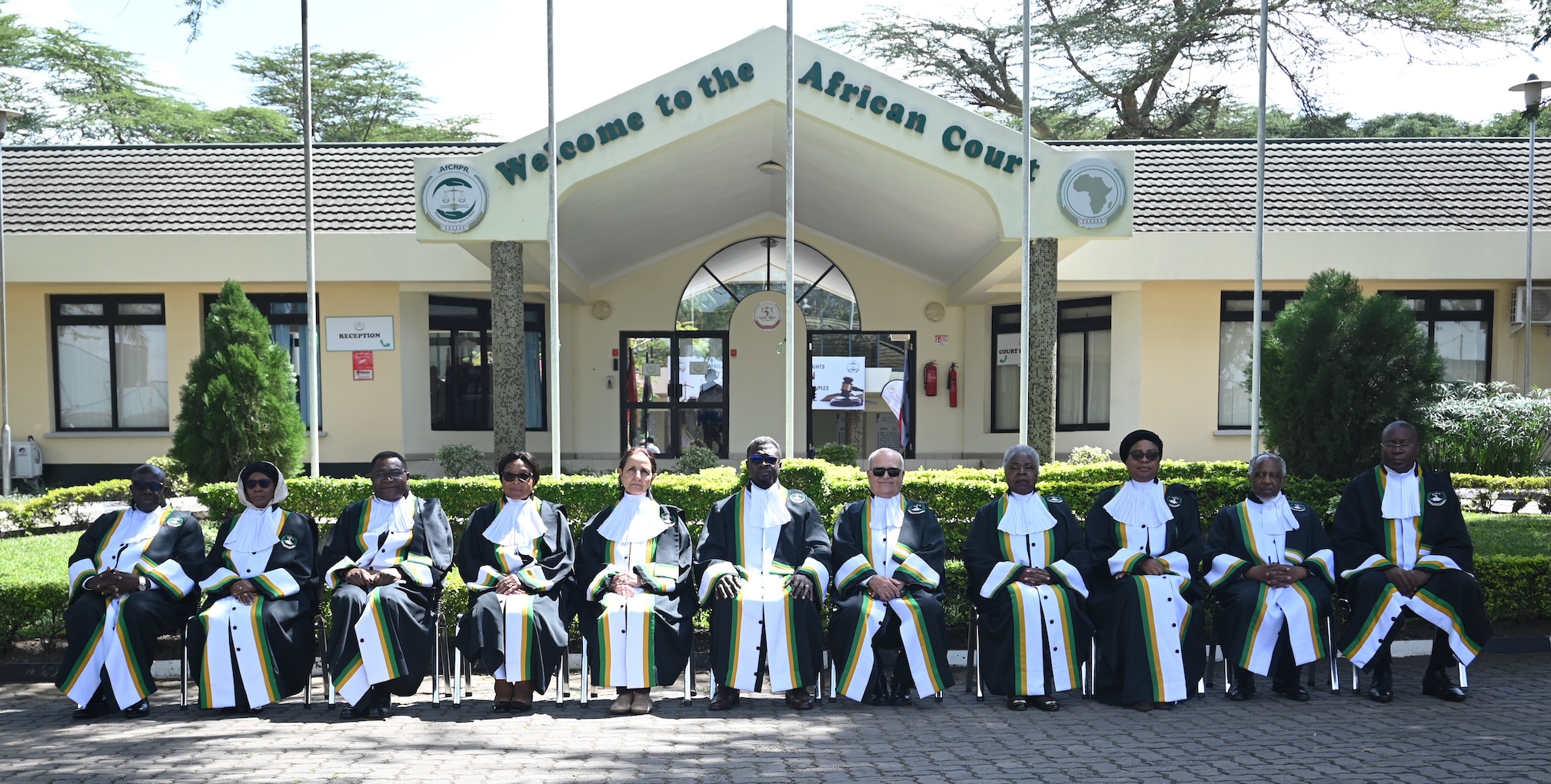
Article
Africa accounts for less than 10 percent of global greenhouse gas emissions. Yet African countries are losing, on average, between 2 and 5 percent of their GDP to climate extremes, and many are diverting up to 9 percent of their budgets to respond to them. The continent is paying for a crisis it did little to create. The question now before Africa's own human rights court is what, in law, its governments owe their people in return.
That question reached the African Court on Human and Peoples' Rights in Arusha on 2 May 2025, when the Pan African Lawyers Union (PALU), supported by the African Climate Platform, Natural Justice, Resilient40 and the Environmental Lawyers Collective for Africa, filed a request for an advisory opinion. As of 1 November 2026, the Court's own register lists the request as pending.
What the Court has been asked
An advisory opinion is not a judgment against anyone. There is no defendant and no damages award. The Court is asked to interpret the law and say what it requires. PALU wants it to read the African Charter on Human and Peoples' Rights alongside the Maputo Protocol, the Kampala Convention on internal displacement and the African Children's Charter, with climate change in view. The request points the Court to a long list of Charter rights, from life and health to the right to a satisfactory environment in Article 24, and its questions reach mitigation, adaptation, remedies for loss and damage, and a just transition to a low-carbon economy.
Why a fourth opinion?
Arusha is not the first stop. Opinions from the International Tribunal for the Law of the Sea (2024), the Inter-American Court of Human Rights (2025) and the International Court of Justice (2025) have already been delivered. In a unanimous opinion on 23 July 2025, the ICJ said that a state's failure to take appropriate action to protect the climate system, including through fossil fuel production, exploration licences or subsidies, may be an internationally wrongful act. It also confirmed that these obligations are owed to the international community as a whole. The Inter-American Court went further in human rights terms. It recognised a right to a healthy climate and treated the obligation not to cause irreversible harm to the climate and environment as a peremptory norm.
Make no mistake, the ICJ's opinion was not the last word. It is not binding, and eleven of its fifteen judges, including all three African judges, wrote separately to say the Court did not go far enough on several issues. Nor did it interpret the African Charter. That, according to one youth climate justice group, is why region-specific obligations may still arise in Arusha.
What is distinctly African
The Charter gives the Court material that other regional treaties do not. Article 24 protects the right to a satisfactory environment, and commentators argue the Court could read it as a right to climate protection with both individual and collective dimensions. The African Commission has already linked Articles 22 and 24, the rights to development and to a satisfactory environment, in its own resolution on climate change. The Harvard Law School Human Rights Program, in its submission to the Court, stresses that the Charter is the only regional human rights instrument to recognise the rights of 'peoples' explicitly. That framing allows climate harm to be understood as an injury to communities and livelihoods, not only to individuals.
Displacement, extractives and business
Two issues may prove the most consequential in practice. The first is displacement. Human Rights Watch has urged the Court to confirm that states owe binding obligations to people displaced by climate change, including rights-respecting planned relocation as a last resort. It points to families in Khar Yalla who were left out of a World Bank-funded relocation of others displaced by coastal floods. A coalition of African and international organisations argued that silence on climate displacement would leave a critical gap in the Court's guidance.
The second is extractive industry. World's Youth for Climate Justice notes that extractive activities are a major income stream for African states but also a source of harm to the environment and local communities, and argues that states are obliged to regulate corporations that cause climate harm. That is an advocacy position, but it finds support in how commentators read the ICJ opinion, which confirmed that a failure to regulate private actors can engage state responsibility. For businesses operating in Africa, particularly in licensed extractives, this is a direction of travel to watch rather than a settled rule.
A record turnout and an open timetable
Interest in the proceedings has been unusual. One report in June 2026 said the Court had received, or expected to receive, a record 107 submissions. A coalition of organisations described it as one of the most widely participated advisory opinions in the Court's history. Amicus submissions were invited until 30 March 2026, after which the Court could hold a public hearing, as the other courts did. We have found no confirmation that a hearing has taken place or that a date for the opinion has been set.
Timing is hard to predict. On the Court's earlier requests, the quickest turnaround was under a month and the longest two and a half years.
What an opinion can and cannot do
Advisory opinions are not binding, and that limits their force. Still, they are authoritative interpretations that governments, national courts and litigants can rely on. The real test is what follows. Khar Yalla is instructive: after an August 2025 report, roughly a dozen of the community's 68 households received electricity, but they are still waiting for a long-term solution.
Three questions will show how far the Court is willing to go. Will it recognise a stand-alone right to a healthy climate, as the Inter-American Court did, or fold climate into existing Charter rights? Will it address fossil fuel licensing and the regulation of corporations as directly as the ICJ did? And will it give displaced communities more than a statement of principle? None of these answers is certain, and we do not predict them here. Each, however, will determine how useful the opinion proves to practitioners, regulators and the communities it is meant to serve.
Arusha cannot settle that on its own. But an opinion that names clear obligations on mitigation, adaptation, displacement and the regulation of business would give lawyers, regulators and communities a regional standard against which to measure their governments. That is the standard to watch for.
Citations (in order of appearance)
[S1] World Meteorological Organization, 'Africa suffers disproportionately from climate change' (press release, Nairobi, 4 September 2023), summarising State of the Climate in Africa 2022; reproduced by the United Nations in Ghana. https://ghana.un.org/en/244689-africa-suffers-disproportionately-climate-change
[S2] World Meteorological Organization, 'Africa faces disproportionate burden from climate change and adaptation costs' (press release, 2 September 2024), summarising State of the Climate in Africa 2023. https://wmo.int/news/media-centre/africa-faces-disproportionate-burden-from-climate-change-and-adaptation-costs
[S3] Sabin Center for Climate Change Law, Climate Litigation Database, 'Request for an advisory opinion on the human rights obligations of African states in addressing the climate crisis' (entry for PALU request, 2 May 2025). https://www.climatecasechart.com/document/request-for-an-advisory-opinion-on-the-human-rights-obligations-of-african-states-in-addressing-the-climate-crisis_2579
[S4] African Court on Human and Peoples' Rights, 'Advisory pending' (case register), Request for Advisory Opinion No 001 of 2025: In the matter of a request by the Pan African Lawyers Union (PALU) for an Advisory Opinion on the obligations of States with respect to the climate change crisis (received 2 May 2025; status 'Pending'). https://www.african-court.org/cpmt/advisory-pending
[S5] Marie Fall, 'Anticipating a Climate Moment in Arusha: State Obligations in the African Court's Forthcoming Advisory Opinion' (VerfBlog, 3 July 2026), DOI 10.59704/9bd0a7f075073225. https://verfassungsblog.de/african-court-on-human-and-peoples-rights-climate-advisory-opinion/
[S6] Sabin Center for Climate Change Law (Columbia Law School), Climate Law Blog, 'Africa's Advisory Opinion Request: Taking Climate Justice to the Continent's Highest Court' (7 May 2025). https://blogs.law.columbia.edu/climatechange/2025/05/07/africas-advisory-opinion-request-taking-climate-justice-to-the-continents-highest-court/
[S7] World's Youth for Climate Justice (WYCJ), 'African Court of Human and Peoples' Rights Advisory Opinion' (organisational page; advocacy source). https://www.wy4cj.org/afchpr
[S8] International Institute for Sustainable Development, Earth Negotiations Bulletin, 'Summary report, 23 July 2025: International Court of Justice Advisory Opinion on the Obligations of States in Respect of Climate Change'. https://enb.iisd.org/international-court-justice-advisory-opinion-climate-change-briefing-note
[S9] Maria Antonia Tigre, Maxim Bonnemann and Antoine De Spiegeleir, 'The ICJ's Advisory Opinion on Climate Change: An Introduction' (Sabin Center, Climate Law Blog, 24 July 2025), citing Obligations of States in respect of Climate Change (Advisory Opinion) [2025] ICJ, paras 429, 438 and 439ff. https://blogs.law.columbia.edu/climatechange/2025/07/24/the-icjs-advisory-opinion-on-climate-change-an-introduction/
[S10] Blackstone Chambers, 'Inter-American Court of Human Rights Advisory Opinion on The Climate Emergency and Human Rights' (18 July 2025), summarising Inter-American Court of Human Rights, The Climate Emergency and Human Rights, Advisory Opinion OC-32/25 (3 July 2025), paras 287-294 (jus cogens) and 298-304 (healthy climate). https://www.blackstonechambers.com/news/inter-american-court-of-human-rights-advisory-opinion-on-the-climate-emergency-and-human-rights/
[S11] Gide Loyrette Nouel, 'The ICJ's advisory opinion on state obligations in respect of climate change: What it means for Africa? (part 2)' (client briefing). https://www.gide.com/en/news-insights/the-icjs-advisory-opinion-on-state-obligations-in-respect-of-climate-change-what-it-means-for-africa-part-2/
[S12] Harvard Law School Human Rights Program, submission to the African Court on Human and Peoples' Rights in Request for Advisory Opinion No 001 of 2025 (advocacy submission). https://hrp.law.harvard.edu/publications/in-the-african-court-on-human-and-peoples-rights-request-for-advisory-opinion-no-001-of-2025/
[S13] Human Rights Watch, 'African Court Should Protect People Displaced by Climate Change' (30 March 2026), accompanying HRW's amicus submission to the Court. https://www.hrw.org/news/2026/03/30/african-court-should-protect-people-displaced-by-climate-change
[S14] Global Strategic Litigation Council, Hakijamii-ESRC, Institute for Human Rights and Development in Africa and Kituo Cha Sheria, 'Coalition of human rights organisations and experts urge the African Court to protect the rights of people at risk or displaced by the climate crisis' (IHRDA, 2026). https://ihrda.org/en/coalition-of-human-rights-organisations-and-experts-urge-the-african-court-to-protect-the-rights-of-people-at-risk-or-displaced-by-the-climate-crisis/
[S15] Burundi Times Contributor, 'Climate Justice: Historic African Court case puts States' climate obligations under spotlight' (Burundi Times, 4 June 2026). https://www.burunditimes.com/climate-justice-historic-african-court-case-puts-states-climate-obligations-under-spotlight/
[S16] The Wave, 'Ten climate litigation moments to look out for in 2026' (January 2026), item 10. https://www.the-wave.net/climate-litigation-preview-january-2026/
[S17] Nzau Musau, 'The African Court can redefine climate justice' (Dialogue Earth, 2025). https://dialogue.earth/en/justice/the-african-court-can-redefine-climate-justice/
[S18] Mongabay, 'Climate displacement in Africa: Court opinion could define states' obligations' (April 2026). https://news.mongabay.com/short-article/2026/04/climate-displacement-in-africa-court-opinion-could-define-states-obligations/
Keep exploring