
Read · Analysis
From The Hague to Domestic Benches: Where the ICJ Climate Opinion Is Being Quoted
A global post-July 2025 judicial uptake across national courts.
Article
The Context
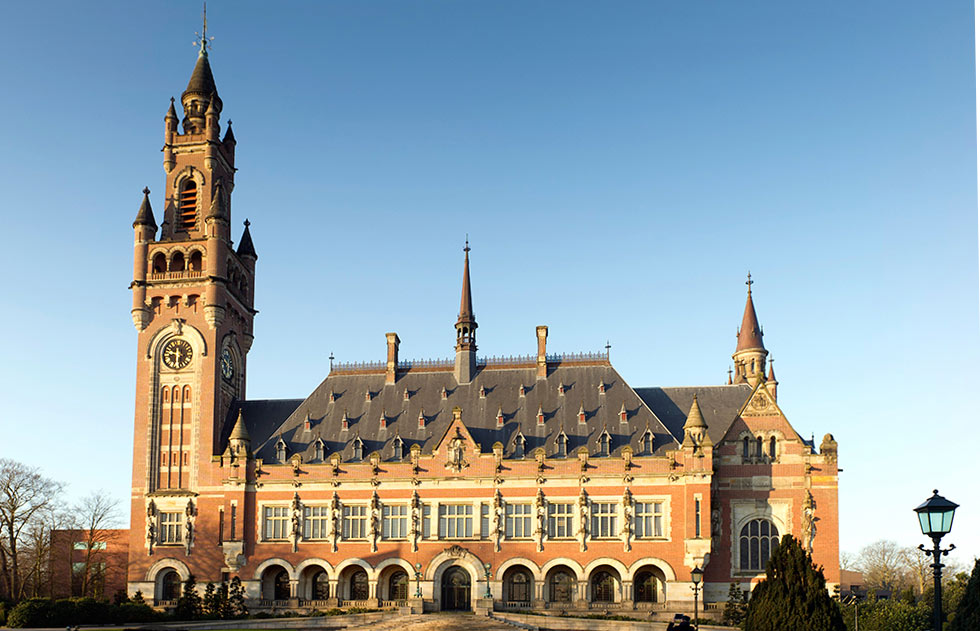
When the International Court of Justice (ICJ) delivered its unanimous Advisory Opinion on 23 July 2025, commentators rightly underscored its historic character on the international plane. Yet, the true test of any advisory ruling lies in how rapidly and persuasively its normative findings travel into domestic courtrooms. In the months following its issuance, the ICJ Advisory Opinion has shifted from an authoritative statement of customary international law into an active litigation tool invoked by domestic judges and public interest litigants across Asia-Pacific, Europe, Latin America, North America, and Africa.[1]
Rather than remaining confined to diplomatic channels or multilateral negotiations, domestic courts are using the ICJ's conclusions to fill regulatory statutory gaps, evaluate municipal environmental impact assessments (EIAs), and establish concrete benchmarks for state due diligence and corporate accountability. This article examines how domestic and regional tribunals have cited and operationalized the Advisory Opinion in real cases, demonstrating that international climate jurisprudence is actively reshaping national legal systems.
“The Court's unqualified reference to obligations under international law indicates that climate obligations do not rest exclusively on climate treaties, but emerge from the entire corpus of general customary international law, human rights, and environmental standards.” – ICJ Advisory Opinion (23 July 2025)
Core Legal Levers Applied by Domestic Courts
Domestic tribunals citing the ICJ Advisory Opinion have primarily drawn upon four core legal principles established by the World Court:
• 1.5°C as a Legal Standard: Courts are rejecting arguments that Nationally Determined Contributions (NDCs) or climate targets are purely discretionary or aspirational, holding that NDCs must reflect progression and the highest possible ambition to hold warming below 1.5°C.[4]
• Scope 3 and Indirect Emissions: Relying on paragraph 94 of the Advisory Opinion, courts are confirming that relevant state conduct encompasses the full range of human activities including fossil fuel production, licensing, and downstream consumption (Scope 3 emissions).[5]
• Stringent Due Diligence for Private Conduct: Judges are applying the ICJ's ruling that states have a positive obligation to exercise heightened vigilance in regulating private corporations under their jurisdiction or control, and that failure to prevent private climate harm constitutes an attributable breach.[6]
• Systemic Integration of Human Rights: Courts are invoking the autonomous right to a clean, healthy, and sustainable environment as a binding norm that informs state duties under administrative and constitutional law.[7]
Cases Quoting the ICJ Opinion
1. Latin America: Thermoelectric Licensing and Amazonian Deforestation (Brazil)
In one of the earliest and most direct judicial applications of the Advisory Opinion, the Ninth Federal Court of Porto Alegre in Brazil extensively cited the ICJ decision in Núcleo Amigos da Terra Brasil v. Federal Government (Amigos da Terra ACP). The case challenged environmental licenses granted for a major thermoelectric plant and coal mine. The court invalidated the licenses, holding that state permitting authorities failed to evaluate climate risks against Brazil's international due diligence duties.[8] Referencing the ICJ Opinion, the judge held that IPCC reports represent the best available science, that state due diligence requires evaluating specific climate risks in EIAs, and that fossil fuel licensing decisions that contradict national mitigation goals engage state responsibility.[9] Similarly, in MPF v. Oliveira Lima, a Brazilian Environmental Court cited the ICJ's rulings on environmental restoration to order full land remediation and climate damage compensation for illegal Amazon deforestation.[10]
2. Europe & The Caribbean: Island Protection and Offshore Oil (Netherlands & Norway)
In Greenpeace Netherlands v. The State of the Netherlands, the District Court of The Hague evaluated the Dutch government's climate adaptation and mitigation plans regarding the Caribbean island of Bonaire. The court drew upon the ICJ's findings on state obligations to vulnerable island populations and sea-level rise to hold that the state had violated human rights by failing to implement sufficient, timely adaptation measures and ambitious mitigation targets.[11] In Europe, the European Court of Human Rights (ECtHR) in Greenpeace Nordic v. Norway incorporated the ICJ's principles regarding state due diligence in licensing fossil fuel exploration in the Arctic, scrutinizing whether petroleum approvals comply with international climate obligations.[12]
3. Asia-Pacific: Downstream Scope 3 Emissions and Greenwashing (Australia & Malaysia)
In Australia, the High Court considered the ICJ Advisory Opinion in MACH Energy Australia Pty Ltd v. Denman Aberdeen Muswellbrook Scone Healthy Environment Group, where litigants challenged approval of a major coal mine expansion. Litigants relied on the ICJ's affirmation that states must evaluate cumulative environmental impacts and downstream Scope 3 combustion emissions during project assessments.[13] In Malaysia, the environmental watchdog RimbaWatch filed a landmark judicial review against two government ministries in RimbaWatch v NRES and KPDN. RimbaWatch relied explicitly on the ICJ Advisory Opinion to argue that state administrative bodies have a mandatory international due diligence duty to investigate misleading corporate greenwashing and 'carbon neutral' fossil fuel marketing.[14]
4. North America & Africa: Statutory Climate Duties and Offshore Permitting (Canada & South Africa)
In Canada, the Federal Court addressed the ICJ Advisory Opinion in Lho'imggin et al. v. Her Majesty the Queen, where Indigenous leaders challenged government climate target legislation. The court analyzed the ICJ's framework on intergenerational equity and state duties to maintain effective legislative enforcement.[15] In South Africa, the High Court referenced the ICJ Opinion in Wild Coast Communities v. Shell to reinforce constitutional environmental rights when setting aside offshore petroleum exploration authorizations due to inadequate climate impact assessments.[16]
Summary of Post-AO Domestic Jurisprudence
Brazil — Case Citation: Amigos da Terra ACP (2025) | Key ICJ Principle Applied: EIAs must evaluate Scope 3 emissions; 1.5°C is a legal standard for licensing.
Netherlands — Case Citation: Greenpeace v. Netherlands (2026) | Key ICJ Principle Applied: State due diligence requires concrete adaptation for vulnerable island territories.
Australia — Case Citation: MACH Energy v. Denman (2025) | Key ICJ Principle Applied: Cumulative climate impact and downstream fossil emissions must be evaluated in mining approvals.
Malaysia — Case Citation: RimbaWatch v NRES (2025–2026) | Key ICJ Principle Applied: State due diligence demands active regulatory investigation of corporate greenwashing.
South Africa — Case Citation: Wild Coast Communities v Shell (2025) | Key ICJ Principle Applied: Offshore oil permitting must incorporate climate due diligence and public participation.
What Is Emerging: Structural Legal Shifts
The emerging post-AO case law highlights three significant structural shifts in global environmental litigation:
First, domestic courts are treating ICJ advisory rulings as persuasive authorities on customary international law. Even though advisory opinions lack formal binding effect between litigating parties, judges recognize that the ICJ speaks as the principal judicial organ of the UN. Its unanimous interpretation of treaty obligations (such as the Paris Agreement and UNCLOS) and customary due diligence provides domestic courts with a solid legal foundation to review executive action.[17]
Second, the 'drop in the ocean' defense is legally crumbling. In paragraph 279, the ICJ explicitly held that the diffuse and multifaceted nature of greenhouse gas emissions does not preclude state responsibility. Domestic judges in Brazil, Australia, and the Netherlands have cited this finding to reject government arguments that local emissions or single projects are too minor to warrant judicial intervention.[18]
Third, state duties to regulate private actors are now explicit. Courts are holding that states cannot remain passive regulators. Under the ICJ's framework, a state's failure to regulate private fossil fuel activities, restrict greenwashing, or mandate supply chain due diligence constitutes an independent, attributable breach of international law.[19]
Why It Matters?
For corporate executives and compliance officers, the rapid judicial adoption of the ICJ Advisory Opinion signals that international climate standards have direct domestic enforcement consequences. Corporate operations involving fossil fuel extraction, project financing, or environmental marketing can no longer rely on statutory silence or regulatory ambiguity. State agencies facing judicial review will increasingly tighten enforcement to avoid international and constitutional liability.[20]
For legal practitioners and public interest litigators, the Advisory Opinion provides a unified, cross-jurisdictional vocabulary. Whether litigating in South America, Europe, or Southeast Asia, lawyers can deploy the same authoritative findings on Scope 3 emissions, 1.5°C threshold benchmarks, and due diligence duties to challenge inadequate government policies and corporate misconduct.[21]
What to Watch for
As post-AO jurisprudence matures, three key developments will shape the next phase of climate law:
• Written Grounds in Pending Appeals: Appellate rulings and written grounds in cases like RimbaWatch v NRES and Amigos da Terra will clarify how domestic courts reconcile statutory discretion with international due diligence duties.[22]
• Regional Advisory Harmonization: The forthcoming Advisory Opinion of the African Court on Human and Peoples' Rights (Application No. 001/2025) will further integrate the ICJ's findings into regional human rights frameworks.[23]
• Corporate Supply Chain & Finance Claims: Pending litigation targeting central banks and commercial financial institutions (such as Milieudefensie v. ING) will test whether state regulatory duties require forcing private finance out of fossil fuel expansion.[24]
Citations (in order of appearance)
1. Policy Backgrounder: Implications of the ICJ's Climate Advisory Opinion (University of Melbourne Laureate Program on Global Corporate Climate Accountability, June 2026), p. 2.
2. ICJ AO Litigation Notes Digest (ClientEarth, CIEL, AIDA, WYCJ, Feb. 2026), 'About this publication', p. 4.
3. Obligations of States in Respect of Climate Change (Advisory Opinion) (International Court of Justice, 23 July 2025), UN Doc A/79/979.
4. ICJ Advisory Opinion (23 July 2025) (n 3), paras. 224, 242 (holding 1.5°C as the primary temperature goal under the Paris Agreement).
5. ICJ Advisory Opinion (23 July 2025) (n 3), para. 94; Joint Declaration of Judges Bhandari and Cleveland, paras. 13–17.
6. ICJ Advisory Opinion (23 July 2025) (n 3), paras. 282, 403, 427–428.
7. ICJ Advisory Opinion (23 July 2025) (n 3), paras. 387–393; Liliana Avila & Mariana Campos, 'Litigation Note on the Right to a Healthy Environment' in ICJ AO Digest (Feb. 2026) (n 2), p. 36.
8. Núcleo Amigos da Terra Brasil and others v. Federal Government (União) and others, Ação Civil Pública (ACP) n. 5050920-75.2023.4.04.7100, Judgment (Ninth Federal Court of Porto Alegre, 22 August 2025), p. 42.
9. Amigos da Terra ACP Judgment (n 8); Louise Fournier et al., 'Litigation Note on Corporate Conduct' in ICJ AO Digest (Feb. 2026) (n 2), p. 44.
10. Federal Public Prosecutor's Office v. Oliveira Lima (MPF v. Oliveira Lima) (Brazilian Environmental Court, 2025); Melbourne Policy Backgrounder (n 1), Box 1.
11. Greenpeace Netherlands v. The State of the Netherlands (2026) ECLI:NL:RBDHA:2026:1344 (The Hague District Court); Melbourne Policy Backgrounder (n 1), Box 1.
12. Greenpeace Nordic & Nature and Youth v. Norway (Case E-18/24, EFTA Court Advisory Opinion, 2025; ECtHR 2025); Melbourne Policy Backgrounder (n 1), Box 1.
13. MACH Energy Australia Pty Ltd v. Denman Aberdeen Muswellbrook Scone Healthy Environment Group & Anor (High Court of Australia, 2025); Melbourne Policy Backgrounder (n 1), Box 1.
14. RimbaWatch v NRES and KPDN (Kuala Lumpur High Court, Judicial Review Applications, Dec. 2025 / Sept. 2026); 'Who Checks a Carbon Neutral Label? RimbaWatch v NRES and KPDN' (2026), pp. 1–3.
15. Lho'imggin & Ors v. Her Majesty the Queen (Federal Court of Canada, 2025); Melbourne Policy Backgrounder (n 1), Box 1.
16. Wild Coast Communities v. Shell (High Court of South Africa, 2025); Melbourne Policy Backgrounder (n 1), Box 1.
17. ICJ Advisory Opinions Explained (Diplomacy and Law, 2026), section 6.4 & 8.7; Freshfields Risk & Compliance Digest (Aug. 2025).
18. ICJ Advisory Opinion (23 July 2025) (n 3), para. 279; Carbon Brief, 'ICJ: What the world court's landmark opinion means for climate change' (25 July 2025).
19. ICJ Advisory Opinion (23 July 2025) (n 3), paras. 427–428; ClientEarth Litigation Notes Digest (n 2), 'Litigation Note on Corporate Conduct', p. 44.
20. New Note, 'From the Hague to the High Street: ICJ’s Climate Opinion Impacts Businesses', Planet & Precedent Series (2025/2026).
21. Joe Udell & Floris Tan, 'Litigation Note on Government Framework Cases' in ICJ AO Digest (Feb. 2026) (n 2), p. 5.
22. RimbaWatch statement on High Court ruling (23 September 2026); The Edge Malaysia Weekly (16–22 February 2026).
23. Application No. 001/2025, Pan African Lawyers Union (PALU) Request for Advisory Opinion on State Obligations with respect to the Climate Crisis (African Court on Human and Peoples' Rights, Amicus Curiae Brief by UN Special Rapporteur, 2025).
24. Milieudefensie v. ING Bank (Amsterdam District Court, filed March 2025); Catherine van Es & Charles Slidders, 'Litigation Note on Financing Climate-Destructive Conduct' in ICJ AO Digest (Feb. 2026) (n 2), p. 54.
Keep exploring