
COP 101 – The Architecture of UN Climate Conference
From the 1992 Rio Foundations to the 2026 Antalya Summit
14 November 2026
Law
What is a UN Climate COP?
Every year, world leaders, diplomats, environmental scientists, corporate executives, and civil society advocates gather at the premier global summit dedicated to addressing anthropogenic climate change. Known officially as the Conference of the Parties (COP), this gathering serves as the supreme decision-making organ of the United Nations Framework Convention on Climate Change (UNFCCC). The parent treaty was adopted at the landmark Rio Earth Summit in 1992 and has achieved near-universal global ratification across 197 Parties. The acronym itself reflects its governance structure: a formal assembly of countries ('Parties') bound by international treaty obligations to prevent dangerous human interference with the global climate system.
Operationally, UN Climate Change Conferences have expanded exponentially over three decades, evolving from modest technical negotiating sessions into the largest annual multilateral conferences convened under the United Nations umbrella. A standard COP is geographically and procedurally split into two distinct sectors: the Blue Zone and the Green Zone. The Blue Zone, managed directly by the UN Climate Change Secretariat, hosts formal intergovernmental negotiations, bilateral delegation meetings, national pavilions, and accredited observer proceedings. Whereas, the Green Zone, overseen by the host government, functions as an open public arena showcasing technological innovations, municipal climate solutions, private-sector commitments, and civil society forums.
At the heart of all COP negotiations lies the foundational treaty principle of Common but Differentiated Responsibilities and Respective Capabilities (CBDR-RC). This principle acknowledges that while climate change represents a shared existential threat to all humanity, countries possess starkly different historical contributions to cumulative greenhouse gas emissions and vastly disparate economic capacities to mitigate and adapt to its impacts. Consequently, international climate policy balances mandatory procedural obligations with differentiated national action pathways.
How the Process Began: From Rio to Kyoto
The formal machinery of international climate diplomacy was set in motion in June 1992, when world leaders gathered in Rio de Janeiro to sign the UNFCCC alongside sister agreements on biodiversity and land degradation. Following the convention's entry into force, the inaugural summit i.e. COP1 was convened in Berlin in 1995. Under the leadership of early conference negotiators, COP1 established the operational rules of procedure, cultivated trust among participating nations, and recognized that voluntary commitments established under the original 1992 text were insufficient to arrest rising atmospheric concentrations of carbon dioxide.
This realization culminated in 1997 at COP3 in Kyoto, Japan, where member states negotiated the landmark Kyoto Protocol. The protocol established the world's first legally binding greenhouse gas reduction targets for advanced industrialized nations, requiring an average reduction of 5.2 percent below 1990 levels during its initial commitment period. Consistent with CBDR-RC, developing nations were exempted from binding emission caps during this early phase which is a structure that generated significant political tension, including the non-ratification of the protocol by key economies like the United States. Nevertheless, Kyoto pioneered market-based carbon trade mechanisms, including the Clean Development Mechanism (CDM), establishing foundational accounting practices for international carbon markets that persist today.
Landmark breakthroughs from past sessions
The trajectory of global climate governance has been shaped by successive turning points across past COPs. Following intense diplomatic friction at COP15 in Copenhagen (2009) and formalization under the Cancun Agreements at COP16 (2010), negotiators established the global objective of limiting temperature increases to below 2°C, while launching financial frameworks such as the Green Climate Fund and setting a collective goal of mobilizing $100 billion annually in climate finance for developing countries.
The most transformative milestone arrived in December 2015 at COP21 in Paris. The Paris Agreement fundamentally restructured climate governance by replacing top-down legal mandates with a hybrid architecture. Under this model, all nations - both developed and developing - commit to common procedural tracking while formulating self-determined national climate targets known as Nationally Determined Contributions (NDCs). The agreement legally bound 196 Parties to hold global warming well below 2°C above pre-industrial levels, while actively pursuing efforts to cap temperature rise at 1.5°C over a repeating five-year cycle of ratcheting ambition.
Subsequent summits shifted the focus from treaty architecture toward practical implementation. COP26 in Glasgow (2021) produced the Glasgow Climate Pact, marking the first explicit global commitment to phase down unabated coal power and phase out inefficient fossil fuel subsidies, while establishing private-sector mobilization platforms like the Glasgow Financial Alliance for Net Zero (GFANZ). COP27 in Sharm El-Sheikh (2022) achieved a historical breakthrough by establishing a dedicated Loss and Damage fund to assist vulnerable frontline communities suffering from climate-induced disasters.
Recent conferences have continued driving institutional change. At COP28 in Dubai (2023), the UAE Consensus produced the first-ever explicit decision calling on nations to transition away from fossil fuels in energy systems. At COP29 in Baku (2024), parties established the New Collective Quantified Goal (NCQG) on climate finance, committing to mobilize at least $300 billion annually by 2035 for developing countries. Most recently, COP30 in Belém, Brazil (2025), launched a new Just Transition Mechanism, pledged to triple global adaptation finance, and institutionalized annual UN trade and climate dialogues.
The 2026 'Triple COP' Year and Environmental Convergence
The year 2026 represents a rare juncture in international environmental diplomacy: a 'triple COP' year. Three decades after the 1992 Earth Summit, the scheduling cycles of all three Rio Conventions aligned within a single calendar year. The process begins with UNCCD COP17 on desertification and land degradation in Ulaanbaatar, Mongolia (August 2026), continues with CBD COP17 recently happened biodiversity in Yerevan, Armenia (October 2026), and concludes with UNFCCC COP31 on climate change in Antalya, Türkiye (November 2026).
This triple convergence shows the systemic linkage between land degradation, biodiversity loss, and global warming. Environmental crises inflict compounding damages on crop yields, freshwater security, labor productivity, and corporate supply chains costing the global economy hundreds of billions of dollars annually. In response, the leadership of all three conventions is orchestrating dedicated private-sector engagement pathways from the Business4Land Forum, the CBD Business Forum, and the COP31 Business & Investment Summit from this year. This alignment is to encourage governments and commercial enterprises to move away from fragmented environmental policies in favor of whole-of-economy strategies that integrate carbon sequestration, circular waste management, and nature-based solutions into core corporate governance.
What Is Coming Up in November 2026: COP31 in Antalya
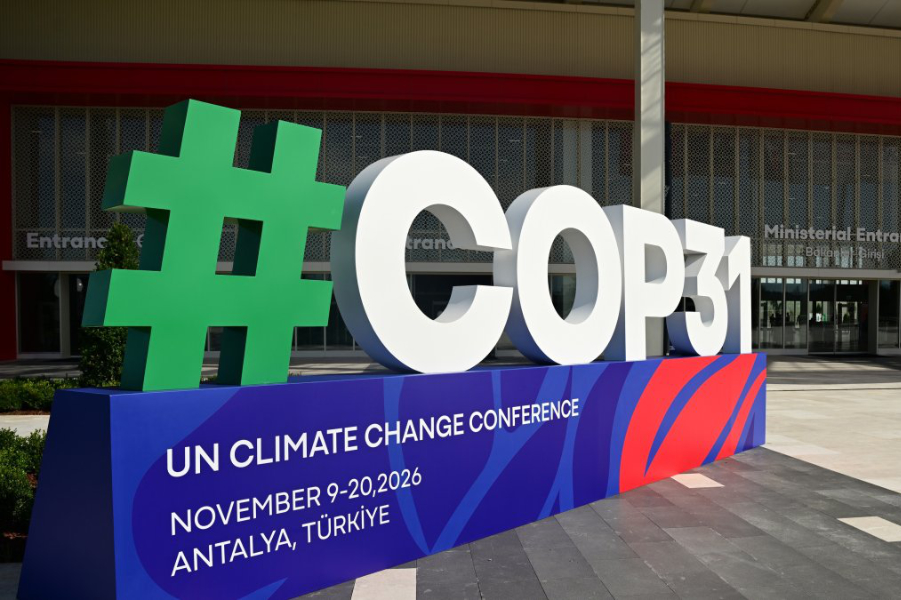
The 31st United Nations Climate Change Conference (COP31) will take place from November 9 to November 20, 2026, at the Antalya Expo Center in Antalya, Türkiye. The official COP Presidency is held by Türkiye, with Minister of Environment, Urbanization and Climate Change Murat Kurum designated as COP31 President, while Australian Climate Change Minister Chris Bowen leads formal negotiations as President of Negotiations.
The hosting arrangements reflect an innovative diplomatic compromise: following three years of competing bids between Türkiye and Australia, the two nations agreed that Türkiye would host the main summit in Antalya, while Australia co-hosted a specialized Pre-COP in Fiji and Tuvalu in October 2026. This Pacific island pre-summit successfully centered the existential priorities of low-lying island states including sea-level rise, coastal erosion, and ocean preservation directly onto the core agenda of the main conference.
COP31 is framed as an 'implementation summit' designed to move global climate action from political pledges to tangible real-economy execution. Negotiation sessions will focus on reviewing progress under the Global Stocktake, operationalizing the Global Goal on Adaptation, and mobilizing international climate finance. Further, the Turkish Presidency has structured the summit around a ten-point Action Agenda. Key agenda priorities include:
• Clean Energy Electrification: Advancing a headline Presidency initiative urging nations to commit to supplying 35 percent of final global energy consumption from electricity by 2035 (up from 23 percent today), supported by accelerated clean grid infrastructure and tariff reform.
• Zero Waste and Circular Economy: Leveraging host nation Türkiye's global Zero Waste movement to embed resource efficiency, food waste reduction, industrial recycling, and circular manufacturing models directly into national climate mitigation plans.
• Climate Adaptation and Resilience: Implementing commitments to triple adaptation finance, scaling accessible concessional loans and grants for developing nations, and cutting administrative bureaucracy within international climate funds.
• Ocean-Climate Strategy: Formalizing ocean conservation and sustainable marine management into main-track UNFCCC policy decisions, recognizing the ocean's capacity to absorb over 90 percent of excess planetary heat.
What to Watch
As delegates assemble in Antalya, three primary indicators will determine the ultimate legacy of COP31:
First, whether developed nations and multilateral development banks present concrete delivery frameworks to operationalize the $300 billion annual climate finance commitments established at COP29, ensuring funding flows directly to high-vulnerability lower-income economies.
Second, whether governments successfully integrate ocean preservation and circular waste strategies into updated Nationally Determined Contributions (NDCs), demonstrating measurable policy shifts rather than non-binding declarations.
Third, whether international mechanisms under Article 6 of the Paris Agreement can establish robust, transparent carbon market rules that channel private investment into verified, high-integrity emission reduction projects worldwide.
Citations (in order of appearance)
1. United Nations Framework Convention on Climate Change (UNFCCC), 'About COP31: The Official Secretariat Guide' (UNFCCC Secretariat, 2026).
2. UNFCCC Secretariat, 'How COPs are Organized: Questions and Answers' (UNFCCC Information Portal, 2026).
3. Edinburgh Earth Initiative, 'A Look Back: Key Milestones in Climate COP History' (University of Edinburgh, 2025).
4. Center for Climate and Energy Solutions (C2ES), 'History of UN Climate Talks: From Rio to Paris and Beyond' (C2ES Policy Hub, 2025).
5. London School of Economics (LSE) Grantham Research Institute, 'What are the UN COP Climate Change Conferences?' (LSE Explainers, 2023).
6. UN Trade and Development (UNCTAD), 'COP30 Debrief on Relevant Outcomes and Opportunities in 2026' (Palais des Nations, Geneva, 2026).
7. Yasmine Fouad, Astrid Schomaker, and Simon Stiell, 'What the 2026 Triple COP Year Means for Business' (UNFCCC / World Economic Forum, 25 August 2026).
8. Official Portal of COP31 Türkiye, 'Dates and Programme: COP31 Antalya Expo Center 2026' (Republic of Türkiye Ministry of Environment, Urbanization and Climate Change, 2026).
9. EMSmastery, 'What is COP31? All You Need to Know!' (EMSmastery Environmental Governance Briefing, 15 October 2026).
10. Vajiram & Ravi, '31st UN Climate Change Conference (COP31) 2026: Date, Venue, and Agenda Highlights' (Current Affairs Study Guide, 29 October 2026).
11. World Resources Institute (WRI), 'What's at Stake at the Next UN Climate Summit (COP31)? Experts Weigh In' (WRI Insights, 22 October 2026).
Keep reading
More explainers
The story behind 1.5°C: Why Did We Decide on This Number?
How scientific consensus and international treaty obligations turned a half-degree temperature target into the world's foundational climate benchmark.
Read the explainer LawUnderstanding Corporate Greenwashing: Definitions, Shades, and Global Enforcement
Corporate greenwashing is the deceptive use of environmental marketing to convey an exaggerated, unfounded, or false impression that an organization's policies, products, or services are environmentally friendly.
Read the explainer